
If Something Feels Off in CMC, It Usually Is...
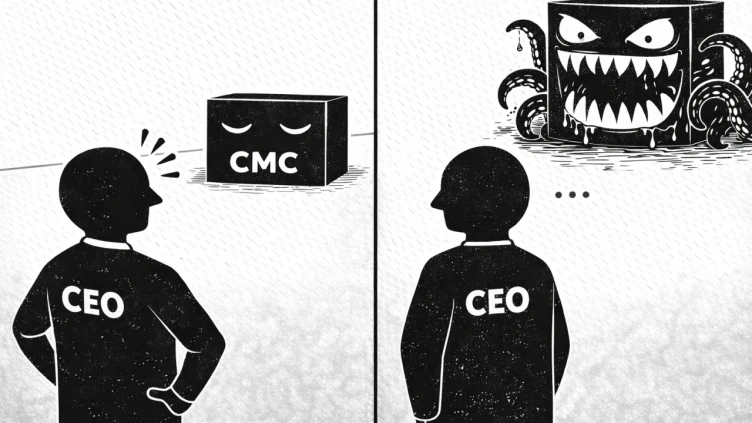
TL;DR This article helps Series A–C CEOs recognize and diagnose early CMC and manufacturing drift—before it shows up in data, audits, or regulatory scrutiny. We do this by translating unease into concrete signals around decision quality, CDMO transparency, and system repeatability, it shows how to correct course while you still have options, leverage, and the resources to act deliberately rather than reactively.
I’ve spoken with a lot of Series A–D CEOs who say some version of the same thing:
“I’m told everything is all right, but my intuition says that something is off with CMC and manufacturing.”
No missed milestones. No warning letters. No single issue you can point to with confidence.
Just friction. Rework. A sense that decisions don’t stay decided.
And a quiet worry that if someone really pressed on why certain choices were made, the answer might depend on who happened to be in the room.
If you're a CEO and this sounds familiar, it’s worth saying this plainly:
Instincts usually show up before the data does and when CMC has 60-75% of your spend and up to 50% of your headcount, you should pay attention to your gut.
What CMC Drift Actually Feels Like
CMC drift doesn’t announce itself as failure. It's subtler.
It shows up as micro-erosion.
Timelines slip a little. CDMO updates are frequent but not clarifying. Documentation exists, but it doesn’t reduce questions. The same decisions quietly reopen under pressure.
Everyone is busy. No one is alarmed. You feel uneasy anyway.
That combination isn’t accidental.
Why This Happens
This isn’t a leadership failure. It’s a stage problem.
Early CMC success is judgment-heavy. Speed matters. Context lives in people’s heads. CDMOs fill gaps quickly. Systems lag execution because they can.
That works—until scale, scrutiny, or complexity challenges what exists.
By Series B, and certainly by Series C+, most companies have at least one asset and more starts to be asked of their manufacturing and CMC infrastructure than they were designed to deliver. Decisions need to be repeatable. Trade-offs need to be defensible. Partners need to operate inside your system, not alongside it.
Drift shows up in that gap.
The Diagnostic for When Something Feels Off
Experienced operators don’t ask whether things are “generally working.” They ask:
Could we defend our most important CMC decisions on paper alone, without the people who made them present?
When CDMO issues occur, do they teach the system—or just get resolved?
Can we trace our last major timeline slip to a specific decision that failed to hold?
If our senior CMC leader stepped away for 90 days, what would break?
Are good decisions reproducible by others, or do they require repeated escalation?
Do our systems reduce cognitive load, or do they depend on it?
With our CDMO, do we see leading indicators—or only outcomes after fixes are applied?
If these questions don’t have clean, evidence-based answers, that’s not overthinking.
Why Audits Don’t Settle the Question
Many CEOs look to audits for reassurance.
Passing matters. But they don’t answer the question of whether you’re GMP ready.
An audit outcome is a moment in time. It shows how the organization performed on a specific day, under observation.
It tells you if everyone showed up, did their job at a specific day and time, it does not tell you whether that performance is repeatable.
When companies struggle under scrutiny, it’s rarely because the science was wrong. It’s because the system couldn’t reliably produce the same result twice.
Anything done once is execution and feels like luck.
Twice is strong coincidence and feels like magic.
Three times, now we're getting to a system that feels normal.
If your audit success requires heroics, you didn’t prove readiness. You proved you can rally.
What About When Drift Shows Up in CDMO Relationships?
CMC drift almost always becomes visible at a CDMO before it does at home.
Decisions blur. Accountability softens. Deviations get “managed.” Updates feel reassuring, but they're not grounding.
Companies want to think that they’re outsourcing execution risk but in reality, you're outsourcing visibility and relying on trust. That trust must be born of data.
As a round table at Executive Platforms #BMWS25 revealed, very few CDMOs operate as an open data book. There are some whose ideal is to surface issues only after they’ve fixed them / gloss over and summarize, rather than openly share, they assume what matters to them should matter to you. It doesn't.
From these CDMO's POV they see the provision of customized data to you as labor intensive and an activity that increases their hourly client burden which eats into margin. However, the best of them do something different.
They platform AND get ahead of the issues.
They work with you to decide which data actually matters, how it should be surfaced, and when escalation should happen — they accept that perfection is the goal but they're prepared for escalation before it's needed and when it is, they're big enough to pick up the phone and work with you to defuse the inevitable time bomb.
These leaders know that transparency isn’t about control. It’s about alignment.
And if you aren't aligned, then CMC drift is already happening.
The Correction Path (Before It’s Forced)
The goal isn’t to panic or reorganize. It's about acting early to preserve optionality.
The goal is to diagnose what’s actually missing—before the situation forces your hand.
Sometimes the gap is systems. Sometimes it’s leadership.
Where Phase 3 Search Fits
It’s important to be clear about our role.
We don’t have the answers because we've personally built every CMC system or launched every product.
We have the answers because we’ve built a network of more than 16,617 CMC leaders, and we work closely with the very best of them.
As the CEO, when I grab my phone, I can call 5 CxOs that have collectively launched north of 200+ products across cell therapy, gene therapy, proteins, and small molecules and have them on the phone in minutes.
The reality is that we know who has solved these problems before.
We know who can diagnose quickly.
And we know who can execute as either a SWAT style rescue mission as a consultant or be the full time hire that builds the systems to make your success repeatable and get your product to patients.
That’s what Phase 3 Search exists to do.
Not to tell you something is wrong. But to help translate instinct into diagnosis—and diagnosis into decisive leadership action—before CMC drift becomes visible risk.
If something feels off, shoot me a message, we'll be happy to talk.
If this is your discipline, let's talk.
Every engagement begins with a diagnostic — a structured read on the role and the company you are actually inheriting.
Start a diagnostic Our CTO & technical leadership practice →