
CMC 2 Board: 4 Lessons to accelerate from TechOps to the Board Table
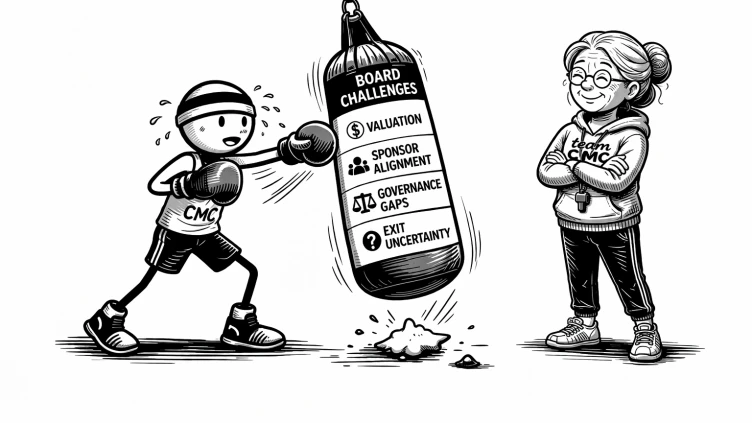
TL;DR: The CMC leaders who make it to the boardroom, and actually change how the room thinks — share four moves that have nothing to do with technical depth. They learned the investment side. They led without authority. They redefined success. And they learned to see the whole system: the people, the functions, and the spaces between them. Read on for lessons that were paid for in careers, not classrooms.
In the first piece in this series, I wrote about the bully in the boardroom: the structural bias that CMC leaders face when they finally get a seat at the table. The room was not built for them, and technical expertise alone will not change that.
This piece is about what actually does.
Because the leaders who survive the boardroom, who have changed how a room thinks about CMC, did not get there by going deeper into their technical discipline. They got there by going wider. The moves they made are not the ones most people expect.
Move 1: Learn the Investment Side
One of the most impressive board-level operators I have spoken to made a deliberate decision mid-career to leave pure technical operations and go work on the investment side. Major life sciences PE firms. Consulting across the board with top-tier growth equity and venture funds. Then an operating partner role with a venture group.
That was not a detour. That was the move.
Because understanding how capital markets work, how VCs think about return, how boards form, how companies get valued and acquired, is not optional knowledge for someone who wants to influence at the enterprise level. It is the price of admission.
You do not have to work at a VC to understand how the money works. But you need to network into that world. Understand investment banking. Understand the ecosystem of a capital raise, who the players are, how term sheets get structured, what a board looks like before and after a Series C. Build relationships with the people who sit on the other side of the table so that when you get to the table yourself, you already speak their language.
Sit in on investor calls. Ask your CFO how the board evaluates capital allocation. Read the proxy statements of public biotechs and study how boards get built. Understand what an acquirer looks at before they write the check because if you cannot explain how CMC creates or destroys enterprise value, the board will not hear you no matter how right you are.
Most CMC leaders think deeper expertise is the path forward. And for a long time, it is. But there is a ceiling, and the ceiling is not technical. It is contextual. One executive I spoke to, someone who climbed from TechOps all the way to CEO, said this was the most liberating realization of their career. Not having a PhD did not hold them back. It freed them. Because their end goal was never to lead a technical unit. It was bigger than that.
Move 2: Lead Without Direct Authority
There is a role that most technical leaders never seek out, and it is the one that prepares you for the board better than anything else.
Program leadership. Enterprise-level coordination. The kind of role where you have high visibility, no direct reports, and a mandate to create the environment for decisions to get made. Not make the decisions. Create the conditions.
One executive described this as the hardest pivot of their career. They had spent years deep in the technical weeds, process development, manufacturing, IT, supply chain, and then stepped into a program leadership role at a major biotech. No one reported to them. Every decision required influence, not authority. They had to hold loosely, create the right conversations, and trust that the right outcome would emerge.
That experience, they said, stretched them in ways that years of technical depth never did.
This is board work. This is exactly what happens when you sit in front of investors and operators who control the capital. You do not command. You translate. You create the environment for the right decision to emerge.
If you have never led without authority, the boardroom will teach you — but the tuition is brutal.
Move 3: Redefine Success: Wisdom Comes from Failure + Reflection
Nobody wants to hear this one.
There is a timeline achievement trap that catches a lot of high-performing leaders. VP by the late 30s. C-suite by the early 40s. Board seat. Named officer. Specific goals, specific timelines.
And then LinkedIn starts running. This company got acquired. That person got promoted. The internal scoreboard starts whispering that you are behind.
One leader I spoke to has been in this industry for nearly 25 years. Their spouse has a running joke and calls them the angel of death. Because if you look at the companies they have been at, most of them went from industry darling to industry warning. $200-a-share to $2-a-share collapses. Near-bankruptcies. The kind of stories that make people quietly update their LinkedIn.
Their reframe was this: the price of being a pioneer can be very high. But working at companies that failed to reach their full goal gave them something that leaders at only-successful companies never get. A richness of understanding about the different levers, the key decisions, what it actually takes to build something durable.
Failure plus reflection. That is where wisdom comes from.
And that is the equation the boardroom needs. Not another person who has only ever seen the upside. Not another resume that reads like a highlight reel. Someone who has been through the machinery and understands how it breaks.
The boardroom does not need more confidence. It needs more context.
Move 4: See the Whole System: People, Functions, and the Spaces Between
Most people think of this as soft skills. It is not. It is the hardest skill on this list.
The leaders who make it to the boardroom understand enough of clinical to know what the development timelines actually mean. They understand enough of commercial to know what the market needs to hear. They understand finance well enough to position for an exit — or to explain why the manufacturing strategy is the exit strategy. They do not need to be the expert in any of those rooms. They need to be fluent enough to connect the dots that nobody else is connecting.
One executive I spoke to spent half their time embedded in commercial, \not because their boss asked them to, but because they realized that was where the real decisions about their function were being shaped. A board member told them manufacturing was "like selling cupcakes." Instead of being offended, they learned the commercial language well enough to walk into the next board meeting and explain a 12-to-15-month sales cycle in terms the room already understood. That changed how the board saw them, and how the board saw CMC.
Another described it even more simply. Take someone from finance to lunch. Once a quarter. Come prepared with questions. Not formal. Not transactional. Just genuine curiosity about how the business works from the other side. Because when a project sits at the interface and needs CMC perspective alongside commercial or clinical input, you want to be the first person they call. Not because you are the smartest person in the room. Because you are the one they already trust.
But cross-functional fluency is only half of it. The other half is leading diversified teams, connecting with a plant manager in one conversation and a regulatory strategist in the next, and seeing how each person fits into the system. Systems are made of people, and people are not interchangeable parts. You cannot design a system that delivers consistent impact without building in enough buffer for the reality that people make mistakes, have bad weeks, and need to be led differently depending on where they sit.
This is an under appreciated advantage of anyone who has operated at the interface. Plant managers. Quality leaders. Anyone who has spent time where functions collide. The technical knowledge gets you considered. But it is the ability to connect as a human, to understand not just the process but the person, that gets you trusted.
And trust is the currency that moves boardrooms.
Where Phase 3 Search Fits In
None of these moves are in a job description. None of them show up on a resume. They live in the conversations that happen between the people who have already walked the path, and they are rarely shared publicly.
Phase 3 Search exists to change that. We sit at the intersection of the people making these moves and the companies that need them. And we are putting the playbook out there so the next generation does not have to learn it alone.
This is the CMC 2 Board series. If you are on this path, or building the team that needs these leaders, reach out. We would like to hear where you are.
#CMC2Board #Phase3Search
If this is your discipline, let's talk.
Every engagement begins with a diagnostic — a structured read on the role and the company you are actually inheriting.
Start a diagnostic Our CTO & technical leadership practice →